Squalene
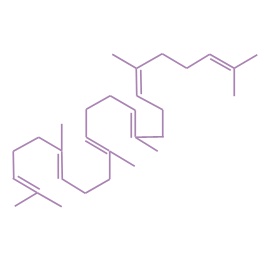
Caractéristiques
- INCI
- Squalene
- CAS
-
111-02-4
Il s'agit du numéro de la substance dans le registre du Chemical Abstracts Service. Le numéro CAS identifie de manière unique une substance indépendamment de la langue, du nom commercial ou des synonymes.
- EC
-
203-826-1
Il s'agit du numéro de substance dans le système européen d'identification chimique (numéro CE), utilisé dans les bases de données réglementaires européennes, y compris ECHA/CosIng.
- IUPAC
- 2,6,10,15,19,23-Hexamethyltetracosa-2,6,10,14,18,22-Hexaene
- Fonctions
- antistatique, émollient, conditionnement des cheveux, rempotage, conditionnement de la peau
Pour qui
Descriptif
Si votre peau pouvait choisir une huile préférée, squalène serait probablement dans la course. C'est l'un de ces lipides naturels que votre peau connaît et utilise déjà: à propos 13% de sébum humain c'est du squalène. Cela en fait un ingrédient très semblable à la peau, c'est pourquoi il se sent à l'aise dans les hydratants, les huiles pour le visage et autres formules émollientes. Historiquement, il provenait pour la première fois du foie de requin, mais de nos jours, il peut également être obtenu à partir de sources végétales telles que les huiles d'olive, d'arachide et de citrouille.
Ce qui le rend intéressant, c'est sa chimie. Le squalène est un hydrocarbure insaturé, ce qui est une façon élégante de dire qu'il contient des doubles liaisons et seulement des atomes de carbone et d'hydrogène. Ces doubles liaisons sont une arme à double tranchant: elles fabriquent du squalène plus sujettes à l'oxydation, mais ils lui donnent aussi un certain potentiel antioxydant. En d'autres termes, il peut aider à éponger certaines des méchancetés réactives qui contribuent au stress oxydatif. Le hic, c'est que cette réactivité en fait aussi moins stable que son cousin plus connu, le squalane, il a donc tendance à avoir une durée de conservation plus courte et est moins courant dans les produits finis.
En tant qu'ingrédient de soin de la peau, le squalène agit principalement comme un émollient léger. Il aide à lisser la surface de la peau et peut réduire cette sensation de tiraillement et de sécheresse sans être particulièrement lourd ou gras. Parce qu'il est si similaire aux composants que votre peau fabrique déjà, il est généralement considéré comme un ingrédient très agréable au toucher pour les peaux sèches ou matures en particulier. Cela dit, son utilité dans les formules dépend beaucoup de l'emballage et du soutien antioxydant, car l'oxydation peut le faire passer de réconfortant pour la peau à un peu capricieux.
Si vous continuez à voir du squalène et du squalane mélangés, vous n'imaginez pas les choses. Ils sont étroitement liés, mais le squalane est la version hydrogénée, plus stable, c'est pourquoi il apparaît beaucoup plus souvent dans les soins de la peau. Le squalène est le plus familier sur le plan biologique, tandis que le squalane est le surpuissant pratique qui survit mieux à la bouteille. Donc, si une formule utilise du squalène, vous recherchez un lipide plus naturel pour la peau avec des avantages antioxydants, mais aussi un lipide qui nécessite un peu plus de baby-sitting cosmétique.
Plus de détails
Preuves scientifiques sur Squalene
-
1
European Journal of Lipid Science and Technology, Volume 111 (5) – May 1, 2009, Squalene: A natural antioxidant?
-
2
Advances in food and nutrition research., 2012;65:223-33., Biological importance and applications of squalene and squalane.Trouver dans PubMed
Produits avec Squalene (2 189 total des dépenses)
Présent surtout dans les produits Bielenda (223 produits)


