Squalene
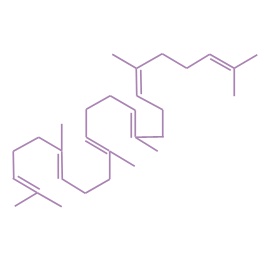
Características
- INCI
- Squalene
- CAS
-
111-02-4
Este es el número de sustancia en el registro del Chemical Abstracts Service. El número CAS identifica de forma exclusiva una sustancia independientemente del idioma, el nombre comercial o los sinónimos.
- EC
-
203-826-1
Este es el número de sustancia en el sistema europeo de identificación química (número CE), que se utiliza en las bases de datos regulatorias europeas, incluida la ECHA / CosIng.
- IUPAC
- 2,6,10,15,19,23-Hexamethyltetracosa-2,6,10,14,18,22-Hexaene
- Funciones
- antiestático, emoliente, acondicionamiento del cabello, volver a engrasar, acondicionamiento de la piel
Para quién
Descripción
Si tu piel pudiera elegir un aceite favorito, escualeno probablemente estaría en la carrera. Es uno de esos lípidos naturales que su piel ya conoce y usa: acerca de 13% de sebo humano es escualeno. Eso lo convierte en un ingrediente muy parecido a la piel, por lo que se siente como en casa en humectantes, aceites faciales y otras fórmulas emolientes. Históricamente, se obtenía por primera vez del hígado de tiburón, pero en la actualidad también se puede obtener de fuentes vegetales como los aceites de oliva, maní y calabaza.
Lo que lo hace interesante es su química. El escualeno es un hidrocarburo insaturado, que es una forma elegante de decir que contiene dobles enlaces y solo átomos de carbono e hidrógeno. Esos dobles enlaces son un arma de doble filo: producen escualeno. más propenso a la oxidación, pero también le dan cierto potencial antioxidante. En otras palabras, puede ayudar a eliminar algunas de las molestias reactivas que contribuyen al estrés oxidativo. El problema es que esta reactividad también lo hace menos estable que su primo más conocido, el escualano, por lo que tiende a tener una vida útil más corta y es menos común en los productos terminados.
Como ingrediente para el cuidado de la piel, el escualeno funciona principalmente como un emoliente ligero. Ayuda a suavizar la superficie de la piel y puede reducir esa sensación de tirantez y sequedad sin ser especialmente pesada o grasosa. Debido a que es muy similar a los componentes que ya fabrica su piel, generalmente se considera un ingrediente de sensación muy amigable para la piel seca o madura en particular. Dicho esto, su utilidad en las fórmulas depende mucho del empaque y del soporte antioxidante, ya que la oxidación puede convertirlo de reconfortante para la piel a un poco temperamental.
Si sigues viendo escualeno y escualano mezclados, no estás imaginando cosas. Están estrechamente relacionados, pero el escualano es la versión hidrogenada y más estable., razón por la cual aparece con mucha más frecuencia en el cuidado de la piel. El escualeno es el más familiar biológicamente, mientras que el escualano es el más exitoso práctico que sobrevive mejor a la botella. Entonces, si una fórmula usa escualeno, está buscando un lípido más natural para la piel con algunos beneficios antioxidantes, pero también uno que necesite un poco más de cuidado cosmético de niños.
Más detalles
Evidencia e investigación sobre Squalene
-
1
European Journal of Lipid Science and Technology, Volume 111 (5) – May 1, 2009, Squalene: A natural antioxidant?
-
2
Advances in food and nutrition research., 2012;65:223-33., Biological importance and applications of squalene and squalane.Buscar en PubMed
Productos con Squalene (2 189 total)
Más frecuente en productos Bielenda (223 productos)


