Bis-Ethylhexyloxyphenol Methoxyphenyl Triazine
Tinosorb S, Bemotrizinol
Caratteristica
- INCI
- Bis-Ethylhexyloxyphenol Methoxyphenyl Triazine
- Ru.
- Tinosorb S, Bemotrizinol
- CAS
-
187393-00-6
Questo è il numero della sostanza nel registro del Chemical Abstracts Service. Il numero CAS identifica in modo univoco una sostanza indipendentemente dalla lingua, dal nome commerciale o dai sinonimi.
- IUPAC
- 2,2'-[6-(4-Methoxyphenyl)-1,3,5-Triazine-2,4-Diyl]Bis[5-[(2-Ethylhexyl)Oxy]-Phenol]
- Funzione
- skin conditioning, uv absorber, uv filter
- EU Restr.
-
VI/25
Status normativo dell'UE: uso limitato. L'ingrediente è consentito nei cosmetici dell'UE, ma il suo uso e l'etichettatura sono regolamentati.
Maggiori dettagli →
Per chi
Descrizione
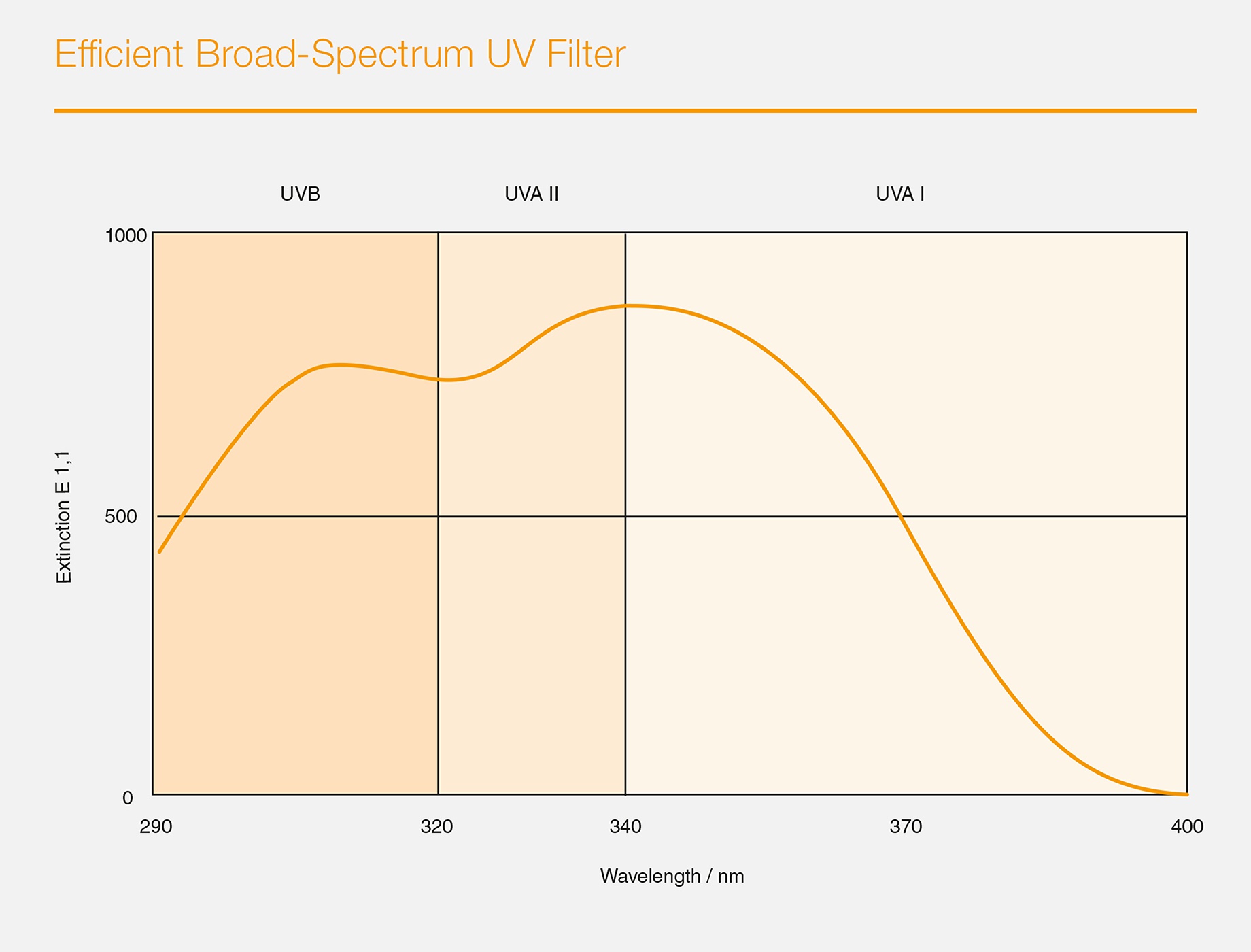
If sunscreen filters had a glamour award, this one would probably show up wearing sunglasses indoors. Bis-Ethylhexyloxyphenol Methoxyphenyl Triazine is a modern, oil-soluble UV filter that delivers very strong broad-spectrum protection, covering both UVB and UVA rays. It has absorption peaks around 310 nm and 345 nm, which means it does a particularly good job in the parts of the UV range that contribute to sunburn and long-term skin damage. In plain English: it helps your sunscreen actually act like a proper sunscreen, not a polite suggestion.
One of its biggest claims to fame is photostability. Some older filters break down as soon as sunlight hits them, which is a bit awkward for a sunscreen ingredient. This one stays impressively intact under UV exposure and can even help stabilize other filters, including the famously finicky avobenzone. That makes it especially useful in formulas that are trying to achieve high SPF and reliable UVA protection without falling apart halfway through your beach walk. In a 2007 comparison of 18 EU-available sunscreen agents, this filter came out looking particularly strong: at the highest allowed concentration, it delivered an SPF of 20 on its own, which is no small feat for a single filter.
It’s also a bit of a globe-trotter. You’ll find it in sunscreens in Europe, Australia, and many Asian markets, but not in the US, where the sunscreen approval process has made newer UV filters frustratingly slow to reach shelves. That has nothing to do with its performance and everything to do with regulation. From a formulation point of view, it’s a slightly yellowish powder that is not meant to sink deeply into your skin, because sunscreen ingredients do their best work sitting on the surface and forming a protective film. That’s exactly where this one likes to be.
Safety-wise, the news is reassuring. It has a great safety profile and, unlike some older chemical filters that got people worried about hormone-like activity, it has not shown estrogenic activity in the usual testing. So the short version is this: if you see this mouthful on a label, your sunscreen is probably trying very hard to be effective, stable, and well-behaved. Not bad for a molecule with a name that looks like it lost a fight with a keyboard.
Maggiori dettagli
Il suo nome INCI è un un boccone, ma Bis-Ethylhexyloxyphenol Methoxyphenyl Triazine vale riconoscerlo com'è uno dei migliori agenti solari conosciuti oggi. Sfortunatamente, non è approvato dalla FDA, quindi non lo troverai nei filtri solari provenienti dagli Stati Uniti (non perché non sia buono, ma perché le normative statunitensi rendono impossibile l'approvazione di nuovi agenti solari), ma è ampiamente disponibile in altre parti del mondo come Europa, Australia o Asia.
Si tratta di un ampio spettro (copre l'intera gamma UVB e UVA, 280-400 nm) agente chimico della protezione solare con protezioni di picco a circa 310 e 345 nm e a differenza dei vecchi filtri UV, è molto fotostabile.Difficilmente si deteriora in presenza di luce UV ed è anche utile per stabilizzare altri agenti solari meno stabili, come il famoso protettore UVA, avobenzone.
È un agente di protezione solare di nuova generazione che è stato specificamente progettato per un alto SPF e una buona protezione UVA e basato su uno studio del 2007 che rispetto ai 18 agenti solari disponibili nell'UE aveva davvero la migliore protezione SPF (hanno usato la più alta concentrazione consentita dalle normative UE da ogni 18 filtri solari e Trinosorb S ha dato un SPF 20 tutto da solo).
È una polvere solubile in olio, leggermente giallastra che non viene assorbita troppo nella pelle. Questa è una buona notizia per un agente di protezione solare in quanto ha bisogno di essere sulla superficie della pelle per fare il suo lavoro correttamente. Per quanto riguarda gli effetti collaterali Bis-etilesilossifenolo metossifenil triazina, abbiamo buone notizie anche qui: ha un grande profilo di sicurezzae a differenza di un paio di altri filtri solari chimici, Trinosorb S (e M) non mostra attività estrogenica.
Nel complesso, pensiamo Trinosorb S è una delle migliori opzioni di protezione solare disponibile oggi.
Ti piacciono gli agenti solari? Abbiamo spiegazioni brillanti (insieme a elenchi di prodotti) anche su altri:
- Metilene Bis-Benzotriazolil tetrametilbutilfenolo, alias Tinosorb M, il buon amico della nostra attuale molecola Tinosorb S
- Tris-Bifenil triazina, alias Tinosorb A2B, la più recente aggiunta alla famiglia Tinosorb che protegge fortemente in una lunghezza d'onda intermedia che la maggior parte degli altri filtri manca
- Etilesil triazone, alias Uvinul T 150, un altro agente solare di nuova generazione con protezione UVB super-alta
- Dietilammino idrossibenzoil Esil benzoato, alias Uvinul A Plus, una protezione solare di nuova generazione per la protezione UVA
Prove e ricerca su Bis-Ethylhexyloxyphenol Methoxyphenyl Triazine
-
1
Pharmazie 62: 449–452 (2007), Study of the efficacy of 18 sun filters authorized in European Union tested in vitro
-
2
Regulatory Toxicology and Pharmacology 34, 287–291 (2001), Lack of Binding to Isolated Estrogen or Androgen Receptors, and Inactivity in the Immature Rat Uterotrophic Assay, of the Ultraviolet Sunscreen Filters Tinosorb M-Active and Tinosorb S
-
3
Chatelain, Eric, and Bernard Gabard. "Photostabilization of Butyl methoxydibenzoylmethane (Avobenzone) and Ethylhexyl methoxycinnamate by Bis‐ethylhexyloxyphenol methoxyphenyl triazine (Tinosorb S), a New UV Broadband Filter¶." Photochemistry and Photobio
Prodotti con Bis-Ethylhexyloxyphenol Methoxyphenyl Triazine (6 103 totale)
Più comune nei prodotti Avene (130 articoli)