Bis-Ethylhexyloxyphenol Methoxyphenyl Triazine
Tinosorb S, Bemotrizinol
Características
- INCI
- Bis-Ethylhexyloxyphenol Methoxyphenyl Triazine
- Ru.
- Tinosorb S, Bemotrizinol
- CAS
-
187393-00-6
Este es el número de sustancia en el registro del Chemical Abstracts Service. El número CAS identifica de forma exclusiva una sustancia independientemente del idioma, el nombre comercial o los sinónimos.
- IUPAC
- 2,2'-[6-(4-Methoxyphenyl)-1,3,5-Triazine-2,4-Diyl]Bis[5-[(2-Ethylhexyl)Oxy]-Phenol]
- Funciones
- skin conditioning, uv absorber, uv filter
- Restricción de la UE.
-
VI/25
Estado reglamentario de la UE: uso restringido. El ingrediente está permitido en los cosméticos de la UE, pero su uso y etiquetado están regulados.
Más detalles →
Para quién
Descripción
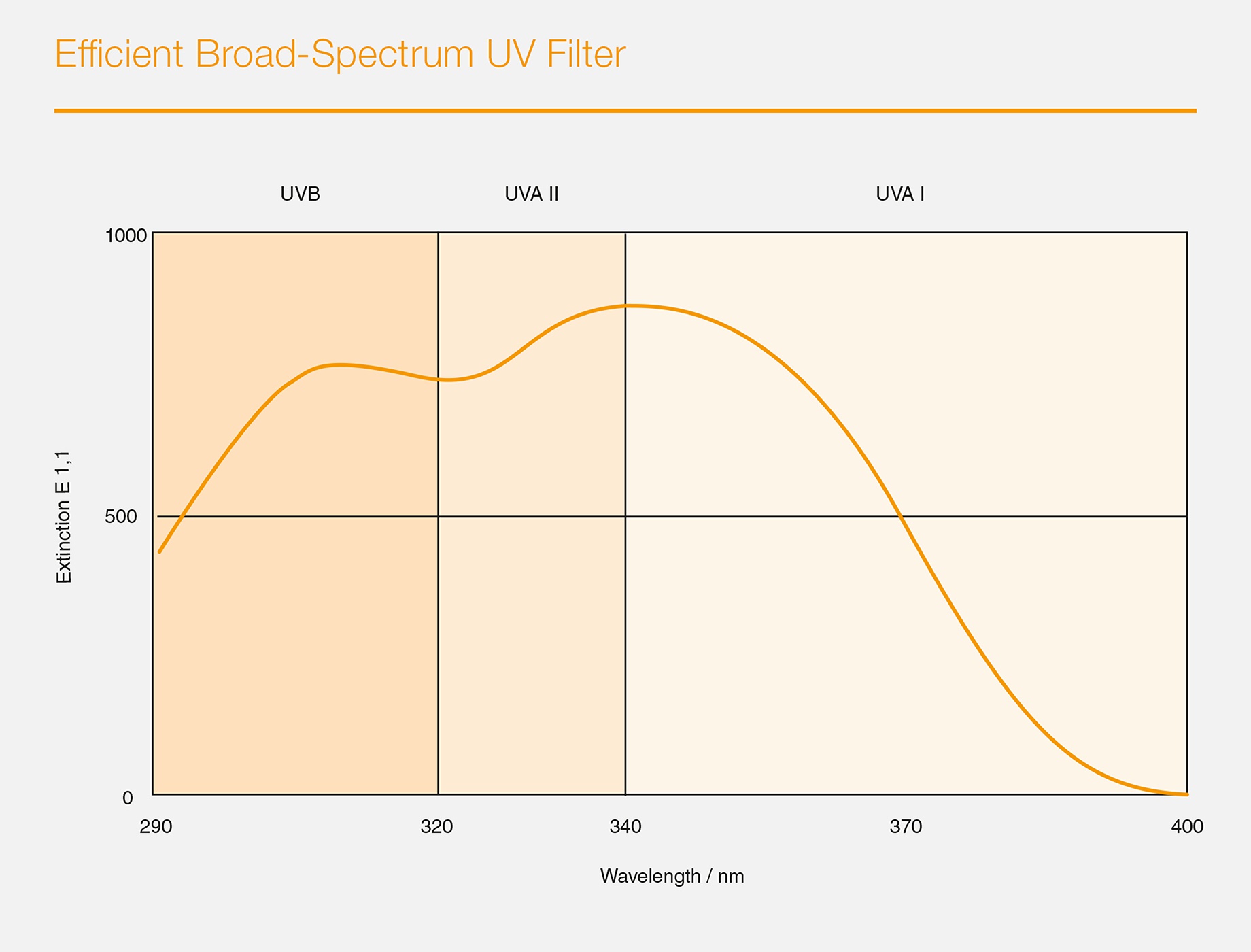
If sunscreen filters had a glamour award, this one would probably show up wearing sunglasses indoors. Bis-Ethylhexyloxyphenol Methoxyphenyl Triazine is a modern, oil-soluble UV filter that delivers very strong broad-spectrum protection, covering both UVB and UVA rays. It has absorption peaks around 310 nm and 345 nm, which means it does a particularly good job in the parts of the UV range that contribute to sunburn and long-term skin damage. In plain English: it helps your sunscreen actually act like a proper sunscreen, not a polite suggestion.
One of its biggest claims to fame is photostability. Some older filters break down as soon as sunlight hits them, which is a bit awkward for a sunscreen ingredient. This one stays impressively intact under UV exposure and can even help stabilize other filters, including the famously finicky avobenzone. That makes it especially useful in formulas that are trying to achieve high SPF and reliable UVA protection without falling apart halfway through your beach walk. In a 2007 comparison of 18 EU-available sunscreen agents, this filter came out looking particularly strong: at the highest allowed concentration, it delivered an SPF of 20 on its own, which is no small feat for a single filter.
It’s also a bit of a globe-trotter. You’ll find it in sunscreens in Europe, Australia, and many Asian markets, but not in the US, where the sunscreen approval process has made newer UV filters frustratingly slow to reach shelves. That has nothing to do with its performance and everything to do with regulation. From a formulation point of view, it’s a slightly yellowish powder that is not meant to sink deeply into your skin, because sunscreen ingredients do their best work sitting on the surface and forming a protective film. That’s exactly where this one likes to be.
Safety-wise, the news is reassuring. It has a great safety profile and, unlike some older chemical filters that got people worried about hormone-like activity, it has not shown estrogenic activity in the usual testing. So the short version is this: if you see this mouthful on a label, your sunscreen is probably trying very hard to be effective, stable, and well-behaved. Not bad for a molecule with a name that looks like it lost a fight with a keyboard.
Más detalles
Su nombre INCI es a un poco de bocado, pero vale la pena reconocerlo tal como es, Bis-Etilhexiloxifenol metoxifenil triazina uno de los mejores agentes de protección solar conocidos en la actualidad. Desafortunadamente, no está aprobado por la FDA, por lo que no lo encontrará en protectores solares provenientes de los EE.UU. (no porque no sea bueno, sino porque las regulaciones estadounidenses hacen imposible que los agentes de protección solar más nuevos sean aprobados), pero está ampliamente disponible en otras partes del mundo como Europa, Australia o Asia.
Es un amplio espectro (cubre todo el rango de UVB y UVA, 280-400 nm) agente protector solar químico con protecciones máximas de aproximadamente 310 y 345 nm y, a diferencia de los filtros UV más antiguos, es muy fotoestable.Apenas se deteriora en presencia de luz ULTRAVIOLETA y también es útil para estabilizar otros agentes de protección solar menos estables, como el famoso protector UVA, la avobenzona.
Es un agente de protección solar de nueva generación que fue diseñado específicamente para un FPS alto y una buena protección UVA y se basó en un estudio de 2007 que en comparación con 18 agentes de protección solar disponibles en la UE, realmente tenía la mejor protección FPS (utilizaron la concentración más alta permitida por las regulaciones de la UE de cada 18 protectores solares y Trinosorb S dio un FPS 20 por sí solo).
Es un polvo soluble en aceite, ligeramente amarillento que no se absorbe demasiado en la piel. Esta es una buena noticia para un agente de protección solar, ya que debe estar en la superficie de la piel para hacer su trabajo correctamente. Con respecto a los efectos secundarios de Bis-Etilhexiloxifenol Metoxifenil Triazina, también tenemos buenas noticias aquí: tiene un gran perfil de seguridady a diferencia de un par de otros protectores solares químicos, Trinosorb S (y M) no muestra actividad estrogénica.
En general, creemos que Trinosorb S es una de las mejores opciones de protector solar disponible hoy.
¿Te gustan los agentes de protección solar? También tenemos explicaciones brillantes (junto con listas de productos) sobre otros:
- Metilen Bis-Benzotriazolil Tetrametilbutilfenol, también conocido como Tinosorb M, el buen amigo de nuestra molécula actual Tinosorb S
- Tris-bifenil triazina, también conocida como Tinosorb A2B, la última incorporación a la familia Tinosorb que protege fuertemente en una longitud de onda intermedia que la mayoría de los otros filtros omiten.
- Etilhexil triazona, también conocida como Uvinul T 150, otro agente de protección solar de nueva generación con protección UVB súper alta
- Benzoato de dietilamino Hidroxibenzoil Hexilo, también conocido como Uvinul A Plus, un protector solar de nueva generación para la protección UVA
Evidencia e investigación sobre Bis-Ethylhexyloxyphenol Methoxyphenyl Triazine
-
1
Pharmazie 62: 449–452 (2007), Study of the efficacy of 18 sun filters authorized in European Union tested in vitro
-
2
Regulatory Toxicology and Pharmacology 34, 287–291 (2001), Lack of Binding to Isolated Estrogen or Androgen Receptors, and Inactivity in the Immature Rat Uterotrophic Assay, of the Ultraviolet Sunscreen Filters Tinosorb M-Active and Tinosorb S
-
3
Chatelain, Eric, and Bernard Gabard. "Photostabilization of Butyl methoxydibenzoylmethane (Avobenzone) and Ethylhexyl methoxycinnamate by Bis‐ethylhexyloxyphenol methoxyphenyl triazine (Tinosorb S), a New UV Broadband Filter¶." Photochemistry and Photobio
Productos con Bis-Ethylhexyloxyphenol Methoxyphenyl Triazine (6 103 total)
Más frecuente en productos Avene (130 productos)