Linolenic Acid
alpha-Linolenic acid, ALA, omega-3 fatty acid, Form of Vitamin F
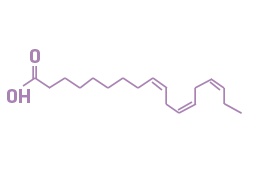
Características
- INCI
- Linolenic Acid
- Ru.
- alpha-Linolenic acid, ALA, omega-3 fatty acid, Form of Vitamin F
- IUPAC
- 9,12,15-Octadecatrienoic Acid (9Z, 12Z, 15Z)
- Funciones
- antiestático, limpieza, emoliente, acondicionamiento del cabello, perfumado, acondicionamiento de la piel, tensioactivo
Para quién
Descripción
El famoso ácido graso omega-3, la madre de todos los ácidos grasos omega-3 en nuestro cuerpo. Junto al ácido linoleico, es el otro ácido graso esencial que nuestro cuerpo no puede sintetizar y tenemos que ingerirlo de nuestros alimentos. También es un ácido graso PUFA, también conocido como ácido graso poliinsaturado con tres enlaces dobles, una estructura química retorcida y por lo tanto una consistencia.
Aunque el ácido linoleico es abundante en la piel, este no es el caso con el ácido alfa-linolénico (ALA). No está claro si está destinado a ser así o si esto es una consecuencia de no comer Omega-3 con los ácidos grasos típicos occidentales.
Aunque los estudios han demostrado que los ácidos grasos ALA tienen una función antiinflamatoria muy buena cuando se usan como un suplemento para la piel, probablemente no es una buena idea cuando se usan como un suplemento.
Evidencia e investigación sobre Linolenic Acid
-
1
McCusker, Meagen M., and Jane M. Grant-Kels. "Healing fats of the skin: the structural and immunologic roles of the ω-6 and ω-3 fatty acids." Clinics in Dermatology 28.4 (2010): 440-451.Buscar en PubMed
-
2
Ando, Hideya, et al. "Linoleic acid and α-linolenic acid lightens ultraviolet-induced hyperpigmentation of the skin." Archives of dermatological research 290.7 (1998): 375-381.Buscar en PubMed
Productos con Linolenic Acid (1 222 total)
Más frecuente en productos Ole Henriksen (26 productos)


