Características
- INCI
- Ceramide EOP
- Ru.
- Ceramide 1
- IUPAC
- Ceramide Eop,1,3,4-Octadecanetriol, 2-Stearoyloxyheptacosamide,Stearoyloxyheptacosanoyl-C18-Phytosphingosine,Stearoyloxyheptacosanoyl-4-Hydroxysphinganine
- Funções
- cabelo condicionado, condicionamento da pele
Para quem
Descrição
As ceramidas têm recebido muita publicidade recentemente e boas notícias: há uma razão para isso. Mas antes de entrarmos nos detalhes, vamos definir rapidamente quais são as ceramidas:
São lípidos cerosos que podem ser encontrados naturalmente na camada exterior da pele (chamado estrato córneo-SC). E eles estão lá em grandes quantidades! O material pegajoso entre nossas células da pele é chamado de matriz extracelular que consiste principalmente de lipídios. E as ceramidas são cerca de 50% desses lípidos (os outros importantes são o colesterol com 25% e os ácidos gordos com 15%).
Ok, então agora sabemos o que são ceramidas, vamos ver o que elas fazem em nossa pele: a pesquisa mostra claramente que elas desempenham um papel papel super importante para manter a barreira cutânea saudável e a pele hidratada. Se as ceramidas na pele forem diminuídas, mais água pode evaporar da pele e há menos água restante na pele. So ceramidas formulário uma espécie de camada de protecção" à prova de água" e certifique-se de que a nossa pele permanece agradável e hidratada.
Agora, a questão é apenas esta: se nóscoloque ceramidas em todo o nosso rosto eles funcionam tão bem quanto as ceramidas já naturalmente em nossa pele? Bem, a resposta é provavelmente um não, mas eles funcionam até certo ponto. O Blog BeautyBrains fez um artigo fantástico sobre ceramidas e listou alguns exemplos sobre estudos que mostram que as ceramidas-especialmente quando usadas em certas proporções com colesterol e ácidos graxos - hidratar a pele e pode ajudar a reparar a barreira cutânea.
Até agora, estávamos escrevendo sobre ceramidas no plural. É porque existem muitas ceramidas diferentes, um artigo de 2014 escreve que atualmente 12 classes de base de ceramidas são conhecidas com mais de 340 espécies específicas. Quimicamente falando, as ceramidas são a conexão de um ácido graxo e uma base esfingóide e ambas as partes podem ter diferentes variações que resultam nos diferentes tipos de ceramidas.
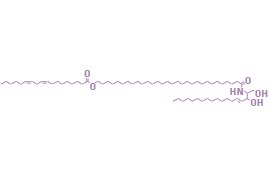
O nosso actual, Ceramida 1, ou mais recentemente denominada ceramida EOP, foi o primeiro que foi identificado em 1982 e é um floco de neve especial. Contém o ácido gordo essencial, o ácido linoleico, e tem uma estrutura única. Acredita-se que a ceramida 1 desempenha um "papel de ligação" nas camadas lipídicas da matriz extracelular. Juntamente com as ceramidas 4 e 7, também desempenham um papel papel vital na integridade epidérmica e servir como o principal zonas de armazenagem de ácido linoleico (um ácido gordo que também é muito importante para a reparação de barreiras).
Ah, e mais uma coisa: o pH alcalino inibe enzimas que ajudam na síntese de ceramidas na nossa pele. Então, se você usa um sabão e percebe que sua pele está ficando seca, agora você sabe o porquê.
Mais detalhes
Evidências e pesquisas sobre Ceramide EOP
-
1
Meckfessel, Matthew H., and Staci Brandt. "The structure, function, and importance of ceramides in skin and their use as therapeutic agents in skin-care products." Journal of the American Academy of Dermatology 71.1 (2014): 177-184.Encontre em PubMed
-
2
Leslie Baumann, MD, Cosmetic Dermatology, 2nd edition, Ceramides p85-86
-
3
Choi, Myeong Jun, and Howard I. Maibach. "Role of ceramides in barrier function of healthy and diseased skin." American journal of clinical dermatology 6.4 (2005): 215-223.Encontre em PubMed
-
4
Huang, Huey‐Chun, and Tsong‐Min Chang. "Ceramide 1 and ceramide 3 act synergistically on skin hydration and the transepidermal water loss of sodium lauryl sulfate‐irritated skin." International journal of dermatology 47.8 (2008): 812-819.Encontre em PubMed
Produtos com Ceramide EOP (3 808 total)
Mais frequente em produtos CeraVe (160 itens)


