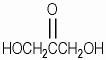
Características
- INCI
- Dihydroxyacetone
- Ru.
- DHA
- CAS
-
96-26-4
Este es el número de sustancia en el registro del Chemical Abstracts Service. El número CAS identifica de forma exclusiva una sustancia independientemente del idioma, el nombre comercial o los sinónimos.
- EC
-
202-494-5
Este es el número de sustancia en el sistema europeo de identificación química (número CE), que se utiliza en las bases de datos regulatorias europeas, incluida la ECHA / CosIng.
- IUPAC
- 1,3-Dihydroxyacetone
- Funciones
- reduciendo, acondicionamiento de la piel, bronceado
Para quién
Descripción
La dihidroxiacetona (DHA) es el ingrediente clásico de auto bronceado utilizado en muchas lociones, mousses, aerosoles y bronceadores graduales. Es un azúcar simple que reacciona con los aminoácidos en la capa más externa de la piel para crear pigmentos de tono marrón, dando la apariencia de un bronceado sin exposición a los rayos UV. En realidad, no cambia la producción de melanina de la piel, por lo que el color es temporal y se desvanece a medida que las células muertas de la piel se desprenden naturalmente.
Para la piel, el DHA se trata principalmente de color cosmético: puede ayudar a las personas que desean un aspecto pálido, incluso la apariencia de las piernas o los brazos, o mantener un aspecto bronceado durante todo el año. También es útil para evitar tomar el sol o broncearse. En el cabello, el DHA no es un azúcar común; su papel principal es el de auto-abrasión; aún así, su función no es la de broncear la piel, por lo que no se expone a la exposición a los rayos UV.
El DHA también puede proporcionar protección contra las manchas, si no se lava la piel, las palmas o las superficies, por lo que los productos de la piel no son tan fuertes, los productos de la piel no son tan fuertes.
Evidencia e investigación sobre Dihydroxyacetone
-
1
Braunberger, T. L., et al. "Dihydroxyacetone: A Review." Journal of drugs in dermatology: JDD 17.4 (2018): 387-391.Buscar en PubMed
-
2
Jung, K., et al. "UV-generated free radicals (FR) in skin: their prevention by sunscreens and their induction by self-tanning agents." Spectrochimica Acta Part A: Molecular and Biomolecular Spectroscopy 69.5 (2008): 1423-1428.Buscar en PubMed
Productos con Dihydroxyacetone (569 total)
Más frecuente en productos Bondi Sands (41 productos)


