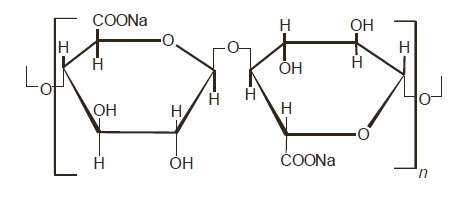
Characteristics
- INCI
- Algin
- Ru.
- Sodium Alginate
- CAS
-
9005-38-3, 57606-04-9
This is the substance number in the Chemical Abstracts Service registry. The CAS number uniquely identifies a substance regardless of language, trade name, or synonyms.
- IUPAC
- Alginic Acid, Sodium Salt
- Functions
- Binding, Masking, Viscosity controlling
- Irritancy
-
4 / 5
Irritation potential: 0–5, where 5 is the highest irritation rating for the ingredient.
More detail → - Comedogen.
-
4 / 5
Comedogenicity index: 0–5. A non-comedogenic ingredient (0–1) is unlikely to cause cosmetic acne.
More detail →
Who it's for
Description
If you’ve ever peeled off one of those satisfyingly rubbery masks and thought, “Well, that was oddly fun,” algin probably had a hand in it. It’s a naturally derived polysaccharide from brown seaweed, and in cosmetics its real superpower is not acting like a star active, but making formulas behave beautifully. It can thicken, stabilize emulsions, and help create those smooth gels and flexible films that give masks their signature bounce.
One of the reasons formulators love it is its chemistry with calcium. When algin meets calcium salts, it can form a gel network, which is why it shows up so often in peel-off masks and professional-style “rubber” masks. That network helps the product set evenly on your skin instead of sliding around like an underachieving pancake batter. In practical terms, that means a more uniform mask experience and better product texture overall.
For your skin, algin is mostly a behind-the-scenes helper. It doesn’t have the long list of dramatic skincare claims that, say, niacinamide likes to collect for fun, but it can make a formula feel more cushiony, cooling, and pleasantly occlusive. That can be especially useful in masks, because a well-formed film can help the formula stay in close contact with the skin for the duration of the treatment. In hair care, it’s also used to improve slip, body, and the overall feel of conditioners, styling products, and scalp treatments.
What about irritation? Algin itself is generally considered a low-drama ingredient and is usually fine for most skin types. The bigger question is the rest of the formula: peel-off masks can be fragranced, heavily pigmented, or packed with extras that may not love sensitive skin. So if you enjoy the spa-like set-and-peel effect, algin is one of those quietly clever ingredients making the whole experience work. Not glamorous, but definitely doing the heavy lifting.
More detail
Algin is a naturally derived polysaccharide, or large sugar molecule, obtained from brown seaweed. In cosmetics, it’s valued mainly for its texture-building abilities: it helps thicken formulas, stabilize emulsions, and create the smooth, pliable gels used in peel-off and “rubber” masks. When paired with calcium salts, algin can form a firm gel network, which is why it’s so common in professional-style masking products.
For skin, algin doesn’t act like a classic active ingredient, but it can make products feel more cushiony, cooling, and evenly spreadable. In masks, that can help ingredients stay in close contact with the skin and make the experience feel more occlusive and spa-like. In hair products, algin may improve slip, body, and texture, especially in conditioners, styling products, and scalp treatments.
Who benefits? People who like masks with a satisfying set-and-peel texture, or formulas that feel silky and well-structured, often enjoy algin-based products. It’s generally useful across many skin types, though very dry or sensitive skin may prefer gentler formulas if the mask is heavily fragranced or includes other potentially irritating ingredients. As with any cosmetic ingredient, the overall formula matters more than algin alone.
Products with Algin (1 842 total)
Most often found in Kristin Ess products (36 items)


