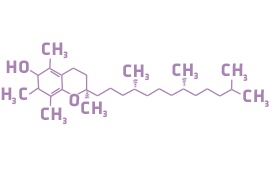
Características
- INCI
- Tocopherol
- Ru.
- Vitamin E
- CAS
-
119-13-1, 1406-18-4, 1406-66-2, 7616-22-0
Este é o número da substância no registo do Chemical Abstracts Service. O número CAS identifica exclusivamente uma substância, independentemente da língua, Nome comercial ou sinónimos.
- EC
-
200-201-5, 240-747-1, 233-466-0, 204-299-0, 215-798-8, 218-197-9, 200-412-2
Este é o número da substância no sistema europeu de identificação química (Número CE), utilizado nas bases de dados regulamentares europeias, incluindo a ECHA/CosIng.
- IUPAC
- 3,4-Dihydro-2,5,7,8-Tetramethyl-2-(4,8,12-Trimethyltridecyl)-2H-Benzopyran-6-Ol; .Alpha.-Tocopherol; Vitamin E
- Funções
- antioxidante, mascaramento, condicionamento da pele
- Irritação
-
0-3 / 5
Potencial de irritação: 0-5, em que 5 é a classificação de irritação mais elevada para o ingrediente.
Mais detalhes → - Comedogénio.
-
0-3 / 5
Índice de comedogenicidade: 0-5. É pouco provável que um ingrediente não comedogénico (0-1) cause acne cosmética.
Mais detalhes →
Para quem
Como atua Tocopherol
A vitamina E é o principais antioxidantes lipossolúveis na nossa pele. Como um antioxidante forte é um A-player na proteção das células da pele das pequenas coisas desagradáveis chamadas radicais livres que querem destruir o colágeno adorável que torna a nossa pele agradável e firme.
Porque é solúvel em gordura, a nossa pele adora absorvê-la (em oposição às coisas solúveis em água, onde temos de enganar a nossa pele para as absorver).
Vit E pode ser encontrado em muitos alimentos: vegetais, óleos, sementes, nozes, milho, soja, farinha de trigo integral, margarina e até mesmo algumas carnes e produtos lácteos. A forma natural é denotada por um' d 'no início do nome e' dl ' denota a forma sintética. Embora isso nem sempre seja verdade, neste caso, a investigação mostra que o a forma natural é mais ativa e é melhor absorvida.
O nome tocoferol, na verdade, refere-se a todo um grupo de coisas e tem quatro subtipos: alfa, beta, gama e delta. Os subtipos são bem diferentes: o alfa-tocoferol é o mais bonito e mais ativo um, enquanto delta-tocoferol parece ser o cara preguiçoso e nem sequer tem propriedades antioxidantes. Nos produtos cosméticos, o tocoferol misto (contendo todos os subtipos) ou o alfa-tocoferol é a melhor escolha.
Existem muitos estudos que mostram que o Vit E tem alguns bons propriedades de fotoproteção, o que significa que pode proteger a pele dos raios UV (e no caso de Vit E é principalmente UVB). Se o colocar na pele, diminui a produção de células solares, reduz os danos causados pelos raios UVB e inibe a fotocarcinogénese.
O que ele não faz é ajudar agains UVA causou problemas de pele como flacidez. Mas se você combiná-lo com Vit C (especialmente em quantidade elevada como 15%), os dois juntos trabalhar em sinergia, dão proteção de amplo espectro e dobram a eficácia um do outro.
Existe também esta lenda urbana de que o Vit e ajuda na cicatrização de feridas. Bem, isso parece ser apenas uma lenda. Vários estudos foram feitos para provar este ponto, mas até agora nenhum deles conseguiu fazê-lo. Em alguns casos, tornou as coisas ainda piores. : (Então, se você tem alguma cirurgia as cicatrizes não colocam vitae contendo material sobre ele. É uma lenda urbana, nenhuma prova.
Perguntas frequentes sobre Tocopherol
What is tocopherol, and why is it used in skincare?
What are the skin benefits of tocopherol?
Is tocopherol safe to use on skin?
What’s the difference between tocopherol and tocopheryl acetate?
Does tocopherol help hair, too?
Tocopherol: fatos rápidos
- Antioxidante lipossolúvel primário na nossa pele
- Fotoproteção significativa contra os raios UVB
- Vit C + Vit e trabalhar em sinergia e fornecer grande fotoproteção
- Tem propriedades emolientes
- Fácil de formular, estável e relativamente barato
Evidências e pesquisas sobre Tocopherol
-
1
Leslie Baumann, MD, Cosmetic Dermatology, 2nd edition, Vitamin E - pages 293-294
-
2
Journal of the American Academy of Dermatology., 2003 Jun;48(6):866-74., UV photoprotection by combination topical antioxidants vitamin C and vitamin E.Encontre em PubMed
Produtos com Tocopherol (51 199 total)
Mais frequente em produtos L'Oreal (385 itens)


