Características
- INCI
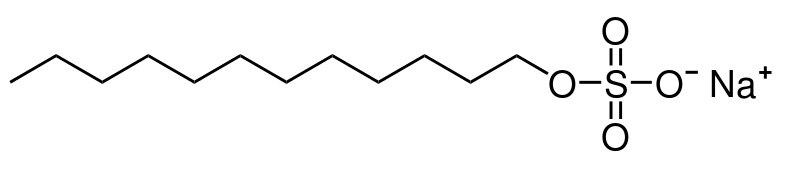
- Sodium Lauryl Sulfate
- Ru.
- SLS
- CAS
-
151-21-3
Este es el número de sustancia en el registro del Chemical Abstracts Service. El número CAS identifica de forma exclusiva una sustancia independientemente del idioma, el nombre comercial o los sinónimos.
- EC
-
205-788-1
Este es el número de sustancia en el sistema europeo de identificación química (número CE), que se utiliza en las bases de datos regulatorias europeas, incluida la ECHA / CosIng.
- IUPAC
- Sodium Dodecyl Sulphate
- Funciones
- cleansing, denaturant, emulsifying, foaming, surfactant
- Comedógeno.
-
0 / 5
Índice de comedogenicidad: 0-5. Es poco probable que un ingrediente no comedogénico (0-1) cause acné cosmético.
Más detalles →
Для кого подходит
Descripción
The famous or rather infamous SLS (not to be confused with SLES). It is a cleansing agent known for being too good at the job and potentially irritating the skin. But, on the positive side, it can produce copious, creamy and luxurious foam compared to the more gentle and thus nowadays much more commonly used Sodium Laureth Sulfate.
In fact, SLS is so good at irritating the skin that it is very commonly used in dermatological studies just for that. It is a so-called "primary irritant", a substance that irritates the skin in one go (without prior sensitization) but doesn't do any other big harm (such as being carcinogenic or systematically toxic - those claims are not true). Also, the formula can greatly influence the irritating potential of SLS, and mixing it with other cleaning agents makes it milder.
If it's not in a cleanser, it works as anemulsifieror even as a penetration enhancer for active materials.
Evidencia e investigación
-
1
Lee, Cheol Heon, and Howard I. Maibach. "The sodium lauryl sulfate model: an overview." Contact Dermatitis 33.1 (1995): 1-7.Buscar en PubMed
Encontrado en productos (1 548 total)
Наиболее часто встречается в продукции Head & Shoulders (43 продуктов)