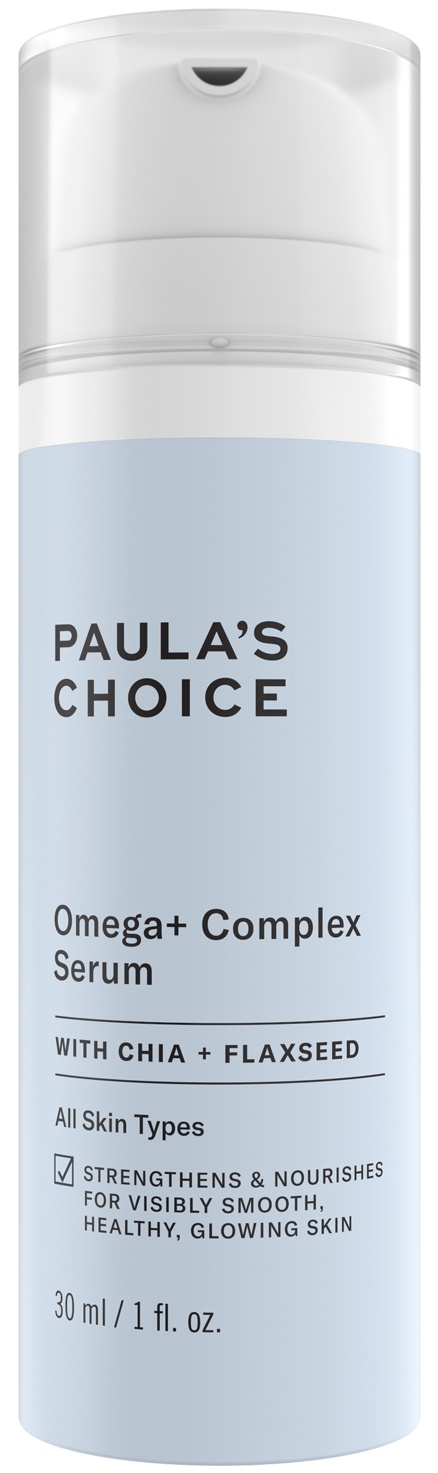
Characteristics
- INCI
- Salvia Hispanica Seed Oil
- Ru.
- Chia Seed Oil
- CAS
-
93384-40-8
This is the substance number in the Chemical Abstracts Service registry. The CAS number uniquely identifies a substance regardless of language, trade name, or synonyms.
- EC
-
297-250-8
This is the substance number in the European chemical identification system (EC number), used in European regulatory databases including ECHA/CosIng.
- Functions
- moisturising, skin conditioning
Who it's for
Description
Chia seeds are in fashion and there is a reason for that. They are not only a superfood for your body but putting the oil all over your face seems to be a good idea too.
Its unique property is that it's the richest known botanical source of skin moisturizing and probably anti-inflammatory alpha-linolenic acid (contains 50-60%). It also contains barrier repairing linoleic acid (17-26%) and only a small amount of very nourishing but potentially acne causing oleic acid (7%).
Thanks to its great fatty acid content, chia seed oil counts as a great skinhydrator and it can help to maintain a healthy skin barrier function. According to manufacturer's info, it can even alleviate itchy skin. If that is not enough, it also contains a couple of nice antioxidants, including Alpha-Lipoic Acid,Coumaric and Caffeic Acid.
All in all, a nice plant oil with a unique fatty acid composition and some nice antioxidants.
Evidence & Research on Salvia Hispanica Seed Oil
-
1
Journal of the American Oil Chemists’ Society, September 1995, Volume 72, Issue 9, pp 1079–1081, Oil content and fatty acid composition of chia (Salvia hispanica L.) from five northwestern locations in Argentina
-
2
Jeong, Se Kyoo, et al. "Effectiveness of topical chia seed oil on pruritus of end-stage renal disease (ESRD) patients and healthy volunteers." Annals of Dermatology 22.2 (2010): 143-148.Find in PubMed
Products with Salvia Hispanica Seed Oil (693 total)
Most often found in Artistry products (20 items)