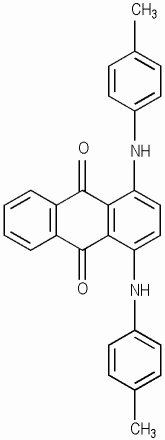
Characteristics
- INCI
- Ci 61565
- CAS
-
128-80-3
This is the substance number in the Chemical Abstracts Service registry. The CAS number uniquely identifies a substance regardless of language, trade name, or synonyms.
- EC
-
204-909-5
This is the substance number in the European chemical identification system (EC number), used in European regulatory databases including ECHA/CosIng.
- IUPAC
- 1,4-Bis(P-Tolylamino)Anthraquinone
- Functions
- Cosmetic colorant
- EU Restr.
-
IV/91
EU regulatory status: restricted use. The ingredient is permitted in EU cosmetics but its use and labelling are regulated.
More detail →
Description
Deep within the world of synthetic colorants, CI 61565 (also known as D&C Green 6 or Quinizarine Green SS) stands as a vibrant, oil-soluble dye derived from anthraquinone chemistry. Anthraquinones are a class of naturally occurring compounds found in plants like aloe and rhubarb, but CI 61565 is entirely lab-created, designed for stability and intense color payoff. Its molecular structure allows it to dissolve seamlessly in oils and waxes, making it a go-to choice for adding a rich, emerald-to-teal hue to anhydrous (water-free) cosmetic formulations. This ingredient is part of a larger family of certified colorants regulated by bodies like the FDA, ensuring its safety and purity for use in personal care products.
When a formulator reaches for CI 61565, they are leveraging its ability to impart color without altering the product's texture or performance. Because it is oil-soluble, it works beautifully in lipsticks, balms, eyeshadows, and creams where water-based dyes would simply bead up or separate. Typically used at concentrations ranging from 0.001% to 0.1%, a tiny amount goes a long way—too much can stain the skin or leave an unnatural tint. Its mechanism of action is purely optical: the dye absorbs specific wavelengths of light and reflects green tones, creating the desired shade. Unlike pigments that sit on the skin's surface, this dye can slightly penetrate the outer layer, which is why it's often blended with other colorants for a more uniform, lasting finish.
The main benefit of CI 61565 is its unparalleled ability to deliver consistent, vivid color in oil-rich formulas. For consumers, this means lipsticks that glide on with a true, even green or teal shade—no streaking or patchiness. It also offers excellent lightfastness, meaning the color won't fade quickly under normal light exposure, keeping your product looking fresh on the shelf. Evidence for its safety and efficacy is robust, as it has been extensively tested for use in cosmetics, with the FDA listing it as a permitted color additive for external use (excluding eye area in some regions). That said, its benefits are almost entirely aesthetic—it doesn't moisturize, protect, or treat the skin, so its role is purely decorative within a formulation.
CI 61565 is best suited for oil-based or waxy products and is a staple in bold, statement-making cosmetics like green lipsticks, emerald eyeliners, or shimmery eyeshadows. It is generally well-tolerated by most skin types, but those with sensitive or reactive skin may want to patch-test, as some individuals can experience mild irritation or staining. In terms of compatibility, it pairs harmoniously with other oil-soluble ingredients like castor oil, beeswax, and synthetic waxes, but it will not mix with water-based phases unless emulsified. One key limitation: it is not approved for use in products intended for the lip area in some countries (e.g., the EU restricts it to external use only), so always check local regulations if you're formulating or purchasing internationally.
On a product label, you'll spot CI 61565 listed under its INCI name, often alongside other colorants like CI 77491 (iron oxides) or CI 77891 (titanium dioxide). Because it's a dye rather than a pigment, it can leave a temporary stain on the skin—don't panic if your green lipstick leaves a faint tint after removal; it's harmless and fades quickly. Interestingly, this same compound is used in some industrial applications as a dye for plastics and textiles, but cosmetic-grade versions are purified to meet strict safety standards. If you're a DIY enthusiast, handle it with care—it's potent, and even a speck can turn a whole batch of balm into a vivid green. Ultimately, CI 61565 is a workhorse for color lovers, proving that a little chemistry can go a long way in making beauty products visually stunning.
Products with Ci 61565 (230 total)
Most often found in Nivea products (7 items)


