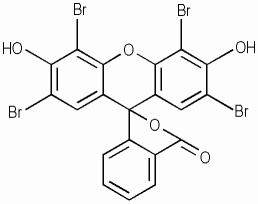
Characteristics
- INCI
- Ci 45380
- Ru.
- Red 22 Lake, Red 21
- CAS
-
17372-87-1, 548-26-5, 15876-39-8, 15086-94-9, 94021-89-3
This is the substance number in the Chemical Abstracts Service registry. The CAS number uniquely identifies a substance regardless of language, trade name, or synonyms.
- EC
-
241-409-6, 240-005-7, 239-138-3, 301-481-2
This is the substance number in the European chemical identification system (EC number), used in European regulatory databases including ECHA/CosIng.
- IUPAC
- Disodium 2-(2,4,5,7-Tetrabromo-6-Oxido-3-Oxoxanthen-9-Yl)Benzoate
- Functions
- Cosmetic colorant
- Irritancy
-
0 / 5
Irritation potential: 0–5, where 5 is the highest irritation rating for the ingredient.
More detail → - Comedogen.
-
2 / 5
Comedogenicity index: 0–5. A non-comedogenic ingredient (0–1) is unlikely to cause cosmetic acne.
More detail → - EU Restr.
-
IV/76
EU regulatory status: restricted use. The ingredient is permitted in EU cosmetics but its use and labelling are regulated.
More detail →
Description
Imagine a pigment that brings the vivid, lasting blush of a rose petal or the seductive sheen of a cherry lip gloss to life. That’s the magic of CI 45380, a synthetic organic dye also known as Red 22 Lake and Red 21. Chemically, it belongs to the xanthene dye family, specifically derived from fluorescein, a compound first synthesized in the late 19th century. In its pure, non-lake form (Red 21), it’s a bright, fluorescent red powder that dissolves in water or oil, but when transformed into a “lake” (by precipitating the dye onto an insoluble substrate like aluminum hydroxide), it becomes a stable, water-insoluble pigment. This lake version is what you’ll most commonly encounter in cosmetics, prized for its intense color payoff and resistance to bleeding or fading when exposed to light, heat, or sweat.
In cosmetics, CI 45380 functions primarily as a colorant, delivering a striking range of red and pink hues that can be tailored from soft, romantic pinks to deep, dramatic crimsons. Its mechanism is purely physical: the pigment particles sit on the skin’s surface, reflecting and absorbing light to create the desired color, without chemically interacting with the skin’s barrier. Formulators love it for its exceptional tinting strength—just a tiny amount (often 0.1% to 5% of the formula) can produce a vivid, uniform color that doesn’t shift or fade over time. It’s particularly effective in anhydrous (water-free) products like lipsticks, blushes, and eyeshadows, where its oil-dispersible nature ensures smooth, even application. However, because it’s a synthetic dye, it’s not used in water-based products without careful stabilization, as it can precipitate or lose intensity.
The main benefits of CI 45380 are its vibrant, long-lasting color and excellent stability. Unlike some natural pigments that can oxidize or change shade with exposure to air, this dye maintains its brilliance for months or even years in a sealed product. It’s also highly versatile: in lipsticks, it delivers a creamy, opaque finish that glides on without streaking; in powder blushes, it provides a buildable, satin sheen that mimics a natural flush. Evidence for its efficacy is strong in the cosmetic industry, though it’s largely empirical—decades of use in thousands of products have proven its reliability. That said, it’s worth noting that its intensity can sometimes be overwhelming if overused, so formulators often blend it with other pigments (like iron oxides or titanium dioxide) to create more nuanced, wearable shades.
When it comes to skin type suitability, CI 45380 is generally well-tolerated, but there are important caveats. It has a comedogenicity rating of 2 (on a scale of 0 to 5), meaning it has a moderate likelihood of clogging pores, especially for those with oily or acne-prone skin. This is because the lake form is a fine particle that can settle into follicles when used in heavy, occlusive bases like lipsticks or cream blushes. For most people, this isn’t an issue—especially when the product is used sparingly or on non-acne-prone areas like lips or cheeks. However, if you’re prone to breakouts, you might want to avoid wearing it in heavy layers on the face. It’s compatible with virtually all other ingredients—silicones, oils, waxes, and preservatives—and doesn’t require special pH conditions, though it can stain fabrics and skin temporarily (a common trait of xanthene dyes). Its irritancy rating is 0, making it non-irritating for most, but those with extremely sensitive skin or allergies to synthetic dyes should patch-test first.
Practically, CI 45380 is easy to spot on labels—it’s listed as CI 45380, Red 22 Lake, or Red 21, often alongside other colorants like iron oxides or mica. In products, you’ll see it most frequently in lip products (lipsticks, glosses, liners), blushes, and eyeshadows, but also in nail polishes and bath bombs for a splash of vivid color. One interesting fact: because it’s derived from fluorescein, it can exhibit a subtle fluorescence under UV light, giving it a “glow” in certain lighting—though this is rarely leveraged in everyday cosmetics. Another curiosity: despite its synthetic origin, it’s approved by most global regulatory bodies (FDA, EU) for use in cosmetics, but not in food or drugs, due to potential toxicity if ingested in large amounts. So, while it’s perfectly safe on your lips, don’t eat your lipstick! In summary, CI 45380 is a workhorse pigment that delivers stunning, reliable color—just be mindful of its pore-clogging potential if you’re acne-prone.
Products with Ci 45380 (415 total)
Most often found in Maybelline products (18 items)


![MAC Lustreglass Sheer Shine Lipstick in shade Hug Me [new formula]](/images/products/thumbs/MAC-Lustreglass-Sheer-Shine-Lipstick-in-shade-Hug-Me-new-formula.webp)