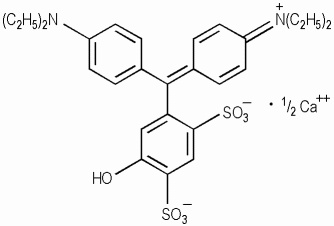
Characteristics
- INCI
- Ci 42051
- CAS
-
3536-49-0
This is the substance number in the Chemical Abstracts Service registry. The CAS number uniquely identifies a substance regardless of language, trade name, or synonyms.
- EC
-
222-573-8
This is the substance number in the European chemical identification system (EC number), used in European regulatory databases including ECHA/CosIng.
- IUPAC
- Bis[Hydrogen [4-[4-(Diethylamino)-5'-Hydroxy-2',4'-Disulphonatobenzhydrylidene]Cyclohexa-2,5-Dien-1-Ylidene]Diethylammonium], Calcium Salt
- Functions
- Cosmetic colorant
- EU Restr.
-
IV/60
EU regulatory status: restricted use. The ingredient is permitted in EU cosmetics but its use and labelling are regulated.
More detail →
Description
You’ve likely encountered CI 42051 on a label without giving it a second thought, but this synthetic dye, also known as Acid Blue 3 or Patent Blue V, has a fascinating origin story rooted in 19th-century chemistry. It belongs to the triphenylmethane dye family, a class of brilliantly colored compounds first synthesized from coal tar derivatives. Specifically, CI 42051 is created through a controlled chemical reaction between benzaldehyde derivatives and aromatic amines, followed by sulfonation to make it water-soluble. While it doesn’t exist in nature, its vivid blue hue mimics the shades of certain gemstones or deep-water reflections, and it’s approved for use in cosmetics, foods, and pharmaceuticals across many regions, including the EU (as E131) and the US (subject to restrictions).
In cosmetics, CI 42051 functions purely as a synthetic colorant, imparting a bright, stable blue or turquoise shade to products. It works by absorbing specific wavelengths of visible light and reflecting the blue spectrum, with its sulfonate groups ensuring it dissolves evenly in water-based formulas. Formulators typically use it at very low concentrations—often between 0.001% and 0.1%—because even tiny amounts produce intense color. It’s most commonly found in rinse-off products like shampoos, shower gels, and facial cleansers, where it enhances visual appeal without staining the skin, though it can also appear in leave-on items like toners or serums for a striking aesthetic.
The primary benefit of CI 42051 is purely aesthetic and psychological—it makes products look more appealing, which can influence a consumer’s perception of efficacy or freshness. For example, a blue shampoo might suggest a cooling, clarifying effect, even if the formula’s actual performance depends on other ingredients. There’s no evidence that this dye offers any skincare benefits like hydration, anti-aging, or protection; its role is strictly cosmetic. That said, its stability under typical pH ranges (4–8) and light exposure makes it a reliable choice for maintaining a product’s intended color over time, which is why it’s been used for over a century in everything from mouthwashes to eye shadows.
CI 42051 is generally considered safe for most skin types at authorized concentrations, but it’s not without limitations. It can cause allergic reactions or irritation in sensitive individuals, particularly those with pre-existing skin conditions like eczema or rosacea, as triphenylmethane dyes are known contact allergens in rare cases. It’s also not recommended for use near the eyes in many regions due to potential stinging or staining, and it should be avoided in products intended for damaged skin. When it comes to ingredient compatibility, it works well with water-based systems but can fade or shift color in the presence of strong oxidizing agents (like benzoyl peroxide) or extreme pH levels. If you have a history of dye sensitivity, patch testing is wise before using products with this colorant.
On a label, CI 42051 will always appear by its Color Index number, never as “Acid Blue 3” or “Patent Blue V” in most regions, so keep an eye out for that numeric code. Interestingly, this dye is also used in medical diagnostics—it’s injected into lymph nodes during surgeries to map the lymphatic system, a testament to its long safety track record when used appropriately. In cosmetics, don’t expect any skincare benefits from it; its job is solely to make your cleanser or toner look Instagram-worthy. If you’re ingredient-savvy and prefer to avoid synthetic dyes, you’ll find it listed in over 240 products in our database, from budget-friendly drugstore finds to luxury brand formulas, so it’s worth checking if you’re aiming for a truly colorant-free routine.
Products with Ci 42051 (241 total)
Most often found in Natura Siberica products (15 items)


