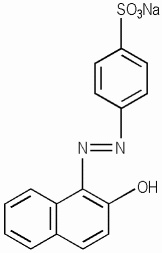
Characteristics
- INCI
- Ci 15510
- Ru.
- Orange 4
- CAS
-
633-96-5
This is the substance number in the Chemical Abstracts Service registry. The CAS number uniquely identifies a substance regardless of language, trade name, or synonyms.
- EC
-
211-199-0
This is the substance number in the European chemical identification system (EC number), used in European regulatory databases including ECHA/CosIng.
- IUPAC
- Sodium 4-[(2-Hydroxy-1-Naphthyl)Azo]Benzenesulphonate
- Functions
- Cosmetic colorant
- EU Restr.
-
IV/21
EU regulatory status: restricted use. The ingredient is permitted in EU cosmetics but its use and labelling are regulated.
More detail →
Description
Deep within the world of synthetic colorants, CI 15510, also known as Orange 4, is a vibrant, water-soluble dye belonging to the monoazo class of chemical compounds. It is derived from petroleum-based raw materials through a carefully controlled chemical synthesis process, specifically by coupling diazotized 2-amino-1,4-benzenedisulfonic acid with 2-naphthol. This gives it a distinct orange to reddish-orange hue, and its chemical structure allows it to bind effectively to various cosmetic substrates. While it doesn't occur in nature, its consistent purity and color intensity make it a staple in the industrial palette of cosmetic formulations.
In cosmetics, CI 15510 functions primarily as a colorant, imparting its vivid orange shade to products through simple dispersion or dissolution. Its mechanism is purely physical—the dye molecules absorb and reflect specific wavelengths of visible light, creating the color we perceive. Formulators favor it because it is highly stable under normal storage conditions and does not easily fade when exposed to light or mild pH fluctuations. Typical concentrations in leave-on and rinse-off products range from 0.001% to 0.5%, though the exact amount depends on the desired opacity and depth of hue. It is often used in combination with other certified colors to achieve custom shades, such as coral, peach, or warm brown tones.
The primary benefit of CI 15510 is its ability to deliver consistent, vibrant color that enhances the aesthetic appeal of cosmetic products. For consumers, this means a predictable and reproducible shade across batches—critical for products like lipsticks, blushes, eyeshadows, and tinted moisturizers. Evidence for its safety and efficacy is robust, as it is one of the many color additives approved by regulatory bodies like the U.S. FDA and the European Commission for use in cosmetics. However, its benefits are purely cosmetic; it offers no skincare or therapeutic effects. When used within approved limits, it does not alter the texture, fragrance, or stability of the formula, making it a reliable choice for achieving visually attractive products.
CI 15510 is generally well-tolerated by most skin types, but it may pose sensitization concerns for individuals with extremely reactive or allergic skin. Like many synthetic azo dyes, it can sometimes trigger contact dermatitis, particularly in leave-on products applied to sensitive areas like the lips or eyes. It is compatible with a wide range of other ingredients, including oils, waxes, emulsifiers, and preservatives, but its color may shift in the presence of strong acids or bases. For this reason, formulators carefully buffer the product's pH to maintain shade integrity. Those with known sensitivities to coal-tar dyes or a history of allergic reactions to color cosmetics should patch-test products containing CI 15510 before widespread use.
When scanning ingredient labels, you'll find CI 15510 listed under its Color Index number, which is the standard naming convention for certified colors. It may also appear as "Orange 4" or "D&C Orange No. 4" in some regions. A curious fact: CI 15510 is one of the few orange dyes approved for use in both the U.S. and the EU, though permissible concentrations vary slightly. In practice, it often appears in formulations alongside other red and yellow dyes to create nuanced warm tones. While it may sound intimidating to those seeking "natural" products, it's worth noting that synthetic colorants like CI 15510 undergo rigorous safety testing and are tightly regulated, ensuring they meet strict purity and dosage standards for consumer safety.
Products with Ci 15510 (361 total)
Most often found in Palmer's products (12 items)


