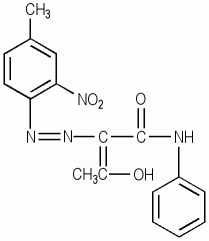
Characteristics
- INCI
- Ci 11680
- CAS
-
2512-29-0
This is the substance number in the Chemical Abstracts Service registry. The CAS number uniquely identifies a substance regardless of language, trade name, or synonyms.
- EC
-
219-730-8
This is the substance number in the European chemical identification system (EC number), used in European regulatory databases including ECHA/CosIng.
- IUPAC
- 2-[(4-Methyl-2-Nitrophenyl)Azo]-3-Oxo-N-Phenylbutyramide
- Functions
- Cosmetic colorant
- EU Restr.
-
IV/4
EU regulatory status: restricted use. The ingredient is permitted in EU cosmetics but its use and labelling are regulated.
More detail →
Description
Imagine a vibrant, sunshiny yellow pigment that brings a cheerful pop of color to everything from lipsticks to eyeshadows. That's CI 11680 for you, a synthetic organic pigment also known by its chemical name, Pigment Yellow 1. Its story begins in a chemistry lab, not a flower field, as it's derived from azo chemistry—a process that links nitrogen atoms to create stable, vivid color molecules. Specifically, it's an arylide yellow, meaning it's built from acetoacetarylide compounds, which are known for producing bright, lightfast yellows. While nature offers yellow from turmeric or safflower, CI 11680 provides a consistency and intensity that natural dyes often cannot match, making it a reliable workhorse in the color industry.
In the world of cosmetics, CI 11680 functions purely as a colorant, meaning its sole job is to impart color to a product. It works by physically coating the skin or hair with tiny, insoluble pigment particles that reflect yellow light. Because it's a pigment (not a dye), it doesn't dissolve in water or oil; instead, it's finely ground and dispersed throughout a formula. Formulators love it for its strong tinting strength—a little goes a long way—and its ability to withstand heat and light without fading quickly. You'll typically find it in concentrations ranging from 0.1% to 5%, depending on the desired shade intensity, but it's rarely used alone; it's often blended with other pigments (like reds or blues) to create custom shades like peach, coral, or green.
The main benefit of CI 11680 is its vibrant, stable yellow hue that doesn't shift or dull over time. Unlike some natural colorants that can oxidize or lose potency, this synthetic pigment offers excellent color retention, meaning that beautiful golden eyeshadow or sunny lip gloss stays true to its shade on your shelf. It also provides great coverage, allowing for opaque, bold color in products like cream blushes or foundation sticks. Evidence for its performance is strong in industrial cosmetic chemistry, though it's worth noting that its benefits are purely aesthetic—it doesn't hydrate, protect, or repair skin. For those seeking color that lasts, however, CI 11680 is a reliable choice, especially in powder-based products where its pigment form shines.
When it comes to skin type, CI 11680 is generally considered safe and non-comedogenic, meaning it's unlikely to clog pores, which is good news for acne-prone or oily skin types. However, because it's a synthetic pigment, some individuals with extremely sensitive or allergic skin may experience irritation, though this is rare and often linked to other ingredients in the formula. It plays well with most other cosmetic ingredients, including emollients, thickeners, and preservatives, but it works best in anhydrous (water-free) systems like powders or oil-based balms, as water can sometimes cause pigment clumping. The main limitation is that it's not approved for use in products meant for the eye area in some regions (like the EU) due to concerns about potential impurity traces, so always check local regulations if you're formulating.
On a product label, CI 11680 will appear as "CI 11680" or "Pigment Yellow 1" in the ingredient list, often grouped with other colorants. If you're shopping for a vibrant yellow product, you'll spot it in items like highlighters, lipsticks, and nail polishes. A fun fact: this pigment is part of a family known as "Hansa Yellows," first developed in the early 20th century, and it's still widely used today because of its exceptional brightness. While it's not a natural ingredient, its safety profile is well-studied, and it's considered low-risk by bodies like the U.S. FDA when used in approved concentrations. So next time you see a sun-bright lipstick or a golden eyeshadow, you can thank CI 11680 for that cheerful, lasting color.
Products with Ci 11680 (107 total)
Most often found in Lifebuoy products (4 items)


