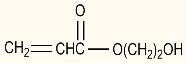
Characteristics
- INCI
- 2-Hydroxyethyl Acrylate
- CAS
-
818-61-1
This is the substance number in the Chemical Abstracts Service registry. The CAS number uniquely identifies a substance regardless of language, trade name, or synonyms.
- IUPAC
- 2-(Acryloyloxy)Ethanol,Ethylene Glycol Acrylate,Hea,Hydroxyethyl Acrylate,2-Propenoic Acid, 2-Hydroxyethyl Ester
- Functions
- Film forming
Description
You might not see 2-Hydroxyethyl Acrylate on the ingredient list of your favorite serum and think "that sounds like something from a chemistry lab," and you'd be right. This ingredient is a synthetic organic compound, specifically a hydroxyalkyl acrylate, produced through the esterification of acrylic acid with ethylene glycol. Its chemical structure features a vinyl group (which allows it to polymerize) and a hydroxyl group (which gives it water-attracting properties). In its raw form, it's a clear, low-viscosity liquid, but its true talent emerges when it's used as a building block for larger polymers in cosmetic formulations. It's not something you'd find in nature; rather, it's a carefully designed molecule that chemists use to create specific textures and performance characteristics in skincare and makeup.
In cosmetics, 2-Hydroxyethyl Acrylate primarily functions as a film-forming agent, meaning it dries down on the skin to create a continuous, flexible, and often invisible layer. When applied, the water or solvent in the formula evaporates, leaving behind a thin polymer film that adheres to the skin's surface. This film can serve multiple purposes: it helps other active ingredients stay put, it can smooth out the skin's texture by filling in fine lines and pores, and it can provide a subtle tightening or "second skin" sensation. Formulators typically use it at low concentrations—often between 0.1% and 2%—because a little goes a long way in creating a uniform film without feeling heavy or sticky. You'll often find it in primers, long-wear foundations, sunscreens, and water-resistant products where durability and adherence are key.
The main benefit of 2-Hydroxyethyl Acrylate is its ability to create a durable, flexible film that enhances the wear and performance of a product. For example, in a long-wear foundation, it helps the pigment stay put on your face rather than transferring to your phone or coffee cup. In a sunscreen, it can improve water resistance and ensure the UV filters remain evenly distributed on your skin. There's also a subtle smoothing effect—the film can fill in micro-depressions on the skin's surface, giving a temporary blurring effect that makes pores and fine lines less noticeable. However, it's worth noting that the evidence for these benefits is largely empirical and based on formulation science rather than large-scale clinical trials; the ingredient's efficacy is highly dependent on the overall formula and how it interacts with other components.
This ingredient is generally considered safe and well-tolerated, but it's not for everyone. Because it forms a film, it can feel slightly tight or occlusive on the skin, which might be uncomfortable for those with very dry or sensitive skin types. If you have a tendency toward clogged pores or breakouts, you'll want to be cautious—while 2-Hydroxyethyl Acrylate itself is not a known comedogen, the film it creates can sometimes trap sebum and dead skin cells if not properly removed at the end of the day. It plays well with most other ingredients, including silicones, emulsifiers, and thickeners, but it's not typically used alongside strong acids or high-pH formulas, as those can interfere with the polymerization process. The good news is that it's water-soluble, so it rinses off easily with a gentle cleanser, reducing the risk of buildup.
When scanning an ingredient list, you'll find 2-Hydroxyethyl Acrylate listed by its full name, though it may also appear as part of a larger polymer name like "2-Hydroxyethyl Acrylate/Sodium Acryloyldimethyl Taurate Copolymer." This copolymer form is actually more common in cosmetics—it's a pre-made polymer that combines 2-Hydroxyethyl Acrylate with other monomers to create a thickening and stabilizing agent. One interesting fact: this ingredient is also used in industrial adhesives and contact lenses, which speaks to its versatility and safety profile. In skincare, it's a workhorse that rarely gets the spotlight, but it's often the reason your makeup lasts through a long day or your sunscreen stays put during a sweaty workout. Just remember: because it forms a film, double-cleansing in the evening is your best friend to ensure nothing is left behind on your skin.
Products with 2-Hydroxyethyl Acrylate (117 total)
Most often found in Seveki products (4 items)


